Video Surveillance & Networking for Multi-Site Businesses in Northern Colorado
Yes — Next Step Communications designs and installs networking, structured cabling and video surveillance for businesses that operate more than one property across Northern Colorado. We work with property managers running multiple apartment communities, healthcare groups refreshing several clinics on the same schedule, multi-location retail chains, and general contractors who need a low-voltage subcontractor who can show up at site two the same way they showed up at site one. One point of contact, one set of standards, no re-explaining the job at every address.
Multi-site work looks different from a single homeowner's project, and a lot of the property managers, healthcare administrators and retail operators who call us are trying to figure out whether we actually do this kind of work before they explain their whole portfolio. Here's a direct answer to the questions we hear most from that caller.
Does Next Step Communications install networking and surveillance for businesses with more than one location?
Yes. A meaningful share of the commercial work we take on across the Front Range isn't a single building — it's a portfolio. That includes property management companies overseeing apartment communities where cameras need to cover parking, entries and common areas; healthcare groups rolling out the same camera and network standard across several clinic locations one at a time; and retail or service businesses with a handful of storefronts that all need to look and perform the same way on the back end.
The advantage of working with one low-voltage contractor across every site is consistency. The cabling standard, the camera models, the network hardware and the documentation are the same at location three as they were at location one, which matters when your IT contact or facilities lead isn't the person standing in the building day to day.
What does a multi-site video surveillance project actually involve?
It starts with a site walk at each property, not a one-size camera count. A 36-unit apartment community needs different camera placement than a single-tenant retail storefront — parking lot coverage, building entries, mail and package areas, and any spot where an incident report is likely to ask "do we have footage of this." We design the camera layout, cable runs and recording setup for each address, then keep the equipment and configuration consistent across the portfolio so any technician on our team — or your own IT contact — can service any location without relearning the system.
For property managers specifically, we frequently see wiring left behind by a previous vendor, dead cameras nobody's replaced, or a DVR nobody has the login for. Part of a multi-site project is often untangling what's already there before adding what's missing, one building at a time, without shutting down coverage while we work.
Can you standardize network and cabling design across every location?
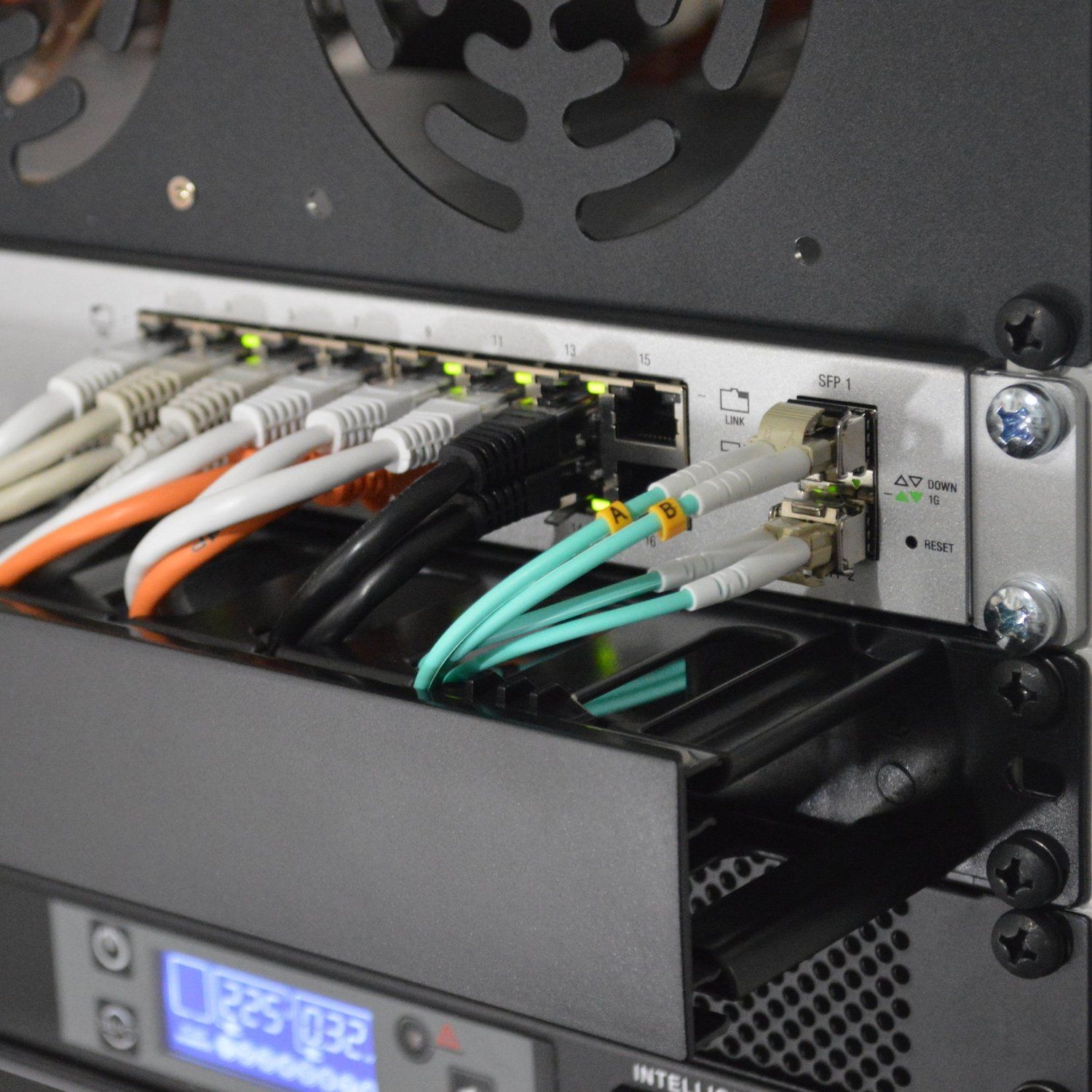
Yes, and this is usually the biggest efficiency gain of hiring one contractor for a portfolio instead of a different local installer at each address. We document the cabling standard, switch and router configuration, and camera model list once, then apply it at every site. That means your team gets a network closet in Longmont that's wired the same way as the one in Fort Collins, with the same labeling convention and the same equipment on the support contract — not five different setups from five different vendors, each with its own quirks.
This matters most for healthcare and retail operators who answer to a corporate standard or a compliance requirement: a consistent, documented build is easier to audit, easier to hand off if staff changes, and easier for us to support remotely once it's in place.
Do you work with property managers and apartment communities specifically?
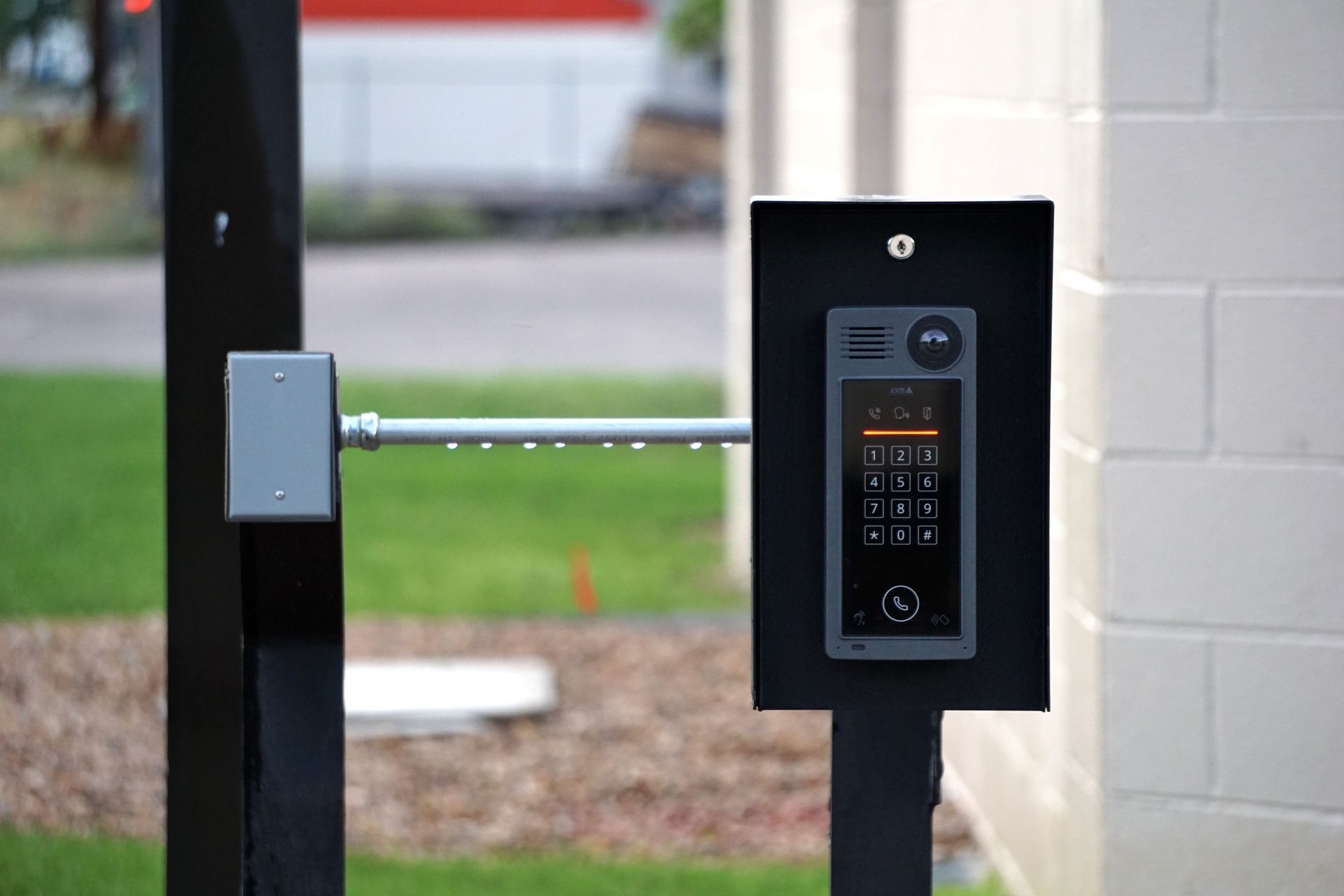
Yes — this is one of the more common calls we get. Apartment and multifamily property managers usually come to us after an incident (a break-in, a parking lot dispute, a liability claim) exposes that existing camera coverage has gaps, or after inheriting a system from a previous management company that nobody currently understands. We handle the full scope: exterior and common-area cameras, the network backbone to support them, and — where a community wants it — access control and gate systems tied into the same network.
What about healthcare offices, retail chains, or businesses with compliance requirements?
We've installed structured cabling and camera systems for healthcare groups coordinating a refresh across several clinic locations, and for retail and service businesses with multiple storefronts that need consistent coverage and network performance at every address. We're a low-voltage installer, not a compliance consultant — for anything with a specific regulatory requirement (HIPAA-adjacent network segmentation, for example), we build to the specification your IT or compliance team hands us and document the install so it holds up if you're ever asked to show it.
Is there a minimum job size, or are we too small a business to bother calling?
No minimum. We take on everything from a single-camera storefront to a full multi-building portfolio, and a lot of our commercial work starts small — one location, one trial project — before a property manager or operator brings us the rest of their sites once they've seen how the first one went.
What's the real difference between a home camera system and a commercial one?
Coverage requirements, storage, and who needs access. A home system usually covers a handful of entry points for one household. A commercial system has to account for public access areas, employee-only zones, parking and perimeter coverage, longer footage retention for liability purposes, and — on a multi-site job — remote viewing access for a facilities or security lead who isn't physically at any one location. The camera hardware itself isn't always dramatically different; the design, storage capacity and network backbone behind it are.
Can you also add background music or a commercial audio system across our locations?
Yes. Distributed audio is a natural add-on to a networking and camera project, especially across multiple locations — the same low-voltage infrastructure and network backbone that runs your cameras can carry a music system too. We install everything from a single-zone system in one small office to a multi-zone setup that lets different areas of a larger property — a lobby, a retail floor, a waiting room — play different audio or run in sync with each other.
For businesses playing music in public spaces, licensing matters — a personal streaming account isn't intended for that use. We set clients up with a properly licensed, public-use commercial streaming service, with the option to insert your own scheduled announcements or promotions into the music at set times of day if you want that. For commercial audio content specifically, we work with Custom Channels, a Boulder-based commercial audio streaming provider, when their programming is the right fit.
Frequently Asked Questions
Do you serve businesses outside the immediate Longmont area?
Yes. Our service area runs from Cheyenne, WY down to Fort Morgan, out to Evergreen and Conifer, and into South Denver, with travel further available for a fee — which covers most multi-site portfolios spread across the Front Range.
Can you take over a camera or network system installed by a previous vendor?
Yes, this is common on multi-site jobs, especially with property management turnover. We'll assess what's already in place — cabling, cameras, recording hardware — and tell you honestly what's worth keeping versus replacing, rather than assuming everything needs to be torn out.
Do all of our locations need to be done at the same time?
No. Most multi-site projects roll out one location at a time, on whatever schedule works for your operations, using the same design standard at each stop so the portfolio ends up consistent even though the work is phased.
Who do you send the invoice and project updates to on a multi-location job?
One point of contact on our side works with one point of contact on yours — typically a property manager, facilities lead or ops contact — so you're not fielding a different conversation at every address.
Do you handle both the network side and the cameras, or just one?
Both. Cameras need a network to run on, so we design and install the structured cabling and network hardware alongside the camera system rather than treating them as separate projects that have to be coordinated between two vendors.
Do you install background music or commercial audio systems, not just security and networking?
Yes — distributed audio, from a single zone to a multi-zone system, is something we add alongside networking and surveillance on multi-site jobs, including properly licensed public-use streaming and scheduled announcement insertion where a client wants that.
How do we get a quote for a multi-site project?
Request an estimate and tell us how many locations and roughly what each one needs — we'll usually start with a site walk at one property before scoping the full portfolio.
If you're managing more than one property or location across Northern Colorado's Front Range, see our commercial networking and surveillance page or request an estimate to start with a walkthrough of your first site. We also install wired and wireless networking, structured cabling, video surveillance and multi-zone audio systems for single-location homes and businesses across the region.